12 Week Body Transformation in London
A twelve-week coached block with a defined start, a defined end and a defined target, run across four private London clubs and judged on what changed rather than on how hard it felt.
- Four clubs, 4 minutes or less from a station
- Open from 06:00 on weekdays
- Your rate confirmed in writing first

Overview
What a 12 week body transformation involves
Twelve weeks is the standard unit for a reason. It is long enough for muscle to be added and fat to come off in a way that shows in a photograph, and short enough that you can hold the plan without your life reorganising itself around it. What changes inside those twelve weeks depends almost entirely on where you start: training age, current body fat, how much you sleep, and how much of the plan you actually run.
The block has a shape. It opens with an assessment that sets the baseline, moves through a phase that builds work capacity before it chases load, and finishes with a review against the same measurements it started with. A deload is scheduled into it rather than taken when something hurts. Training, protein and sleep are treated as one system, because moving one without the others is how most twelve-week attempts stall around week five.
Progress is judged on body composition, strength numbers, measurements and photographs taken under the same conditions each time. Scale weight is recorded and largely ignored, because during a block where muscle is being added and fat lost it is the least informative number available.
What a structured block gives you
A start, an end and a target
A block with defined edges behaves differently from open-ended training. There is something to commit to, something to measure against, and a point at which you and your coach look at the evidence and decide what happens next.
A baseline you can be judged against
Measurements, strength numbers and photographs are taken in week one under conditions that can be repeated. Twelve weeks later the same set is taken again. That comparison is the only honest answer to whether the block worked.
Fatigue managed on purpose
A deload week is written into the plan rather than earned by getting hurt. Managing accumulated fatigue is what lets the back half of a block still add load instead of grinding through it.
Training and eating pointed the same way
Energy intake is set against the goal of the block and moved as the block runs. Training that pulls one way while intake pulls the other is the most common reason twelve weeks produce very little.
A plan that survives your actual week
Session days are placed where they will hold, and the eating plan is built for client lunches, late finishes and travel. A plan abandoned in week four returns nothing, however good it looked on paper.
Four clubs to run it from
Soho, Liverpool Street, Marylebone and Canary Wharf. Twelve weeks is long enough that where you work will change at some point, and the block travels with you rather than lapsing.
What gets in the way
How long does a body transformation take?
- The block was never defined, so there was no start, no end and nothing to measure against
- Training was consistent but energy intake was never set, so the two worked against each other
- The deficit was too aggressive, which cost muscle, sleep and training quality in the same fortnight
- Nothing was measured at the start, so there is no honest way to tell what the twelve weeks did
- Progress was judged on daily scale weight, which moves for reasons that have nothing to do with fat
- The plan assumed a week that does not exist, and stopped surviving contact with work in the first month

When should you see a GP before a 12 week block?
Most healthy adults can start strength training without a medical check. See your GP first if you have a heart condition, high blood pressure, diabetes treated with medication, are pregnant, or have had surgery in the last eight weeks. If eating has ever been a struggle, talk to your GP or Beat before any block that tracks body composition.
Stop and call 999 for chest pain, severe breathlessness or fainting during exercise. For urgent advice that is not an emergency, use NHS 111. A Body Transformation London coach programmes around a settled condition; a coach does not diagnose or treat one.
How long does it take to see results from the gym?
Strength usually moves first, measurements next and the mirror last. Body Transformation London judges a 12 week body transformation on all three, because each moves on a different clock and the scale follows none of them closely.

- Working weights on the main lifts often rise within the first few weeks, as technique and coordination improve.
- Waist and limb measurements usually start to move within the first month or two of a consistent block.
- A difference you can see in matched photographs typically takes most of the twelve weeks, and depends on where you started.
- Scale weight is recorded throughout and read as a weekly trend, never as a single morning.

How much does a 12 week body transformation cost in London?
Published 12-week and 3-month programmes in London cost from £2,150 to £3,420 on 30 September 2026, usually at three sessions a week. Coaches who publish rates for sessions at the UNTIL clubs Body Transformation London works with charge about £80 to £130 a session, so the total depends on how many sessions a week your block needs.
The block itself is 1-2-1 personal training for a 12 week body transformation, with nutrition coaching set up alongside it. Your coach confirms their rate and what the block includes in writing before you commit.
How it works
Body transformation coaching for your 12 weeks
1-2-1 Personal Training
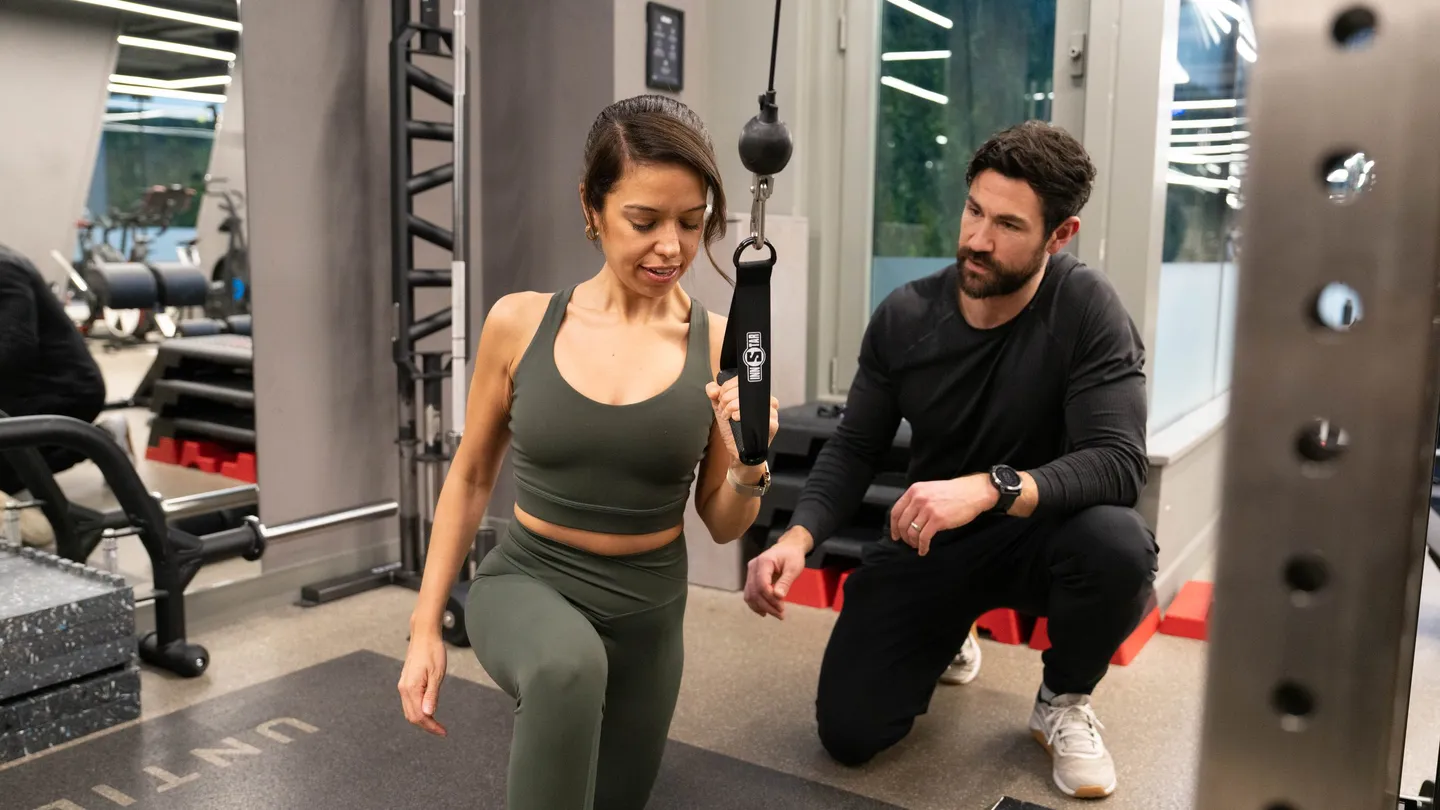
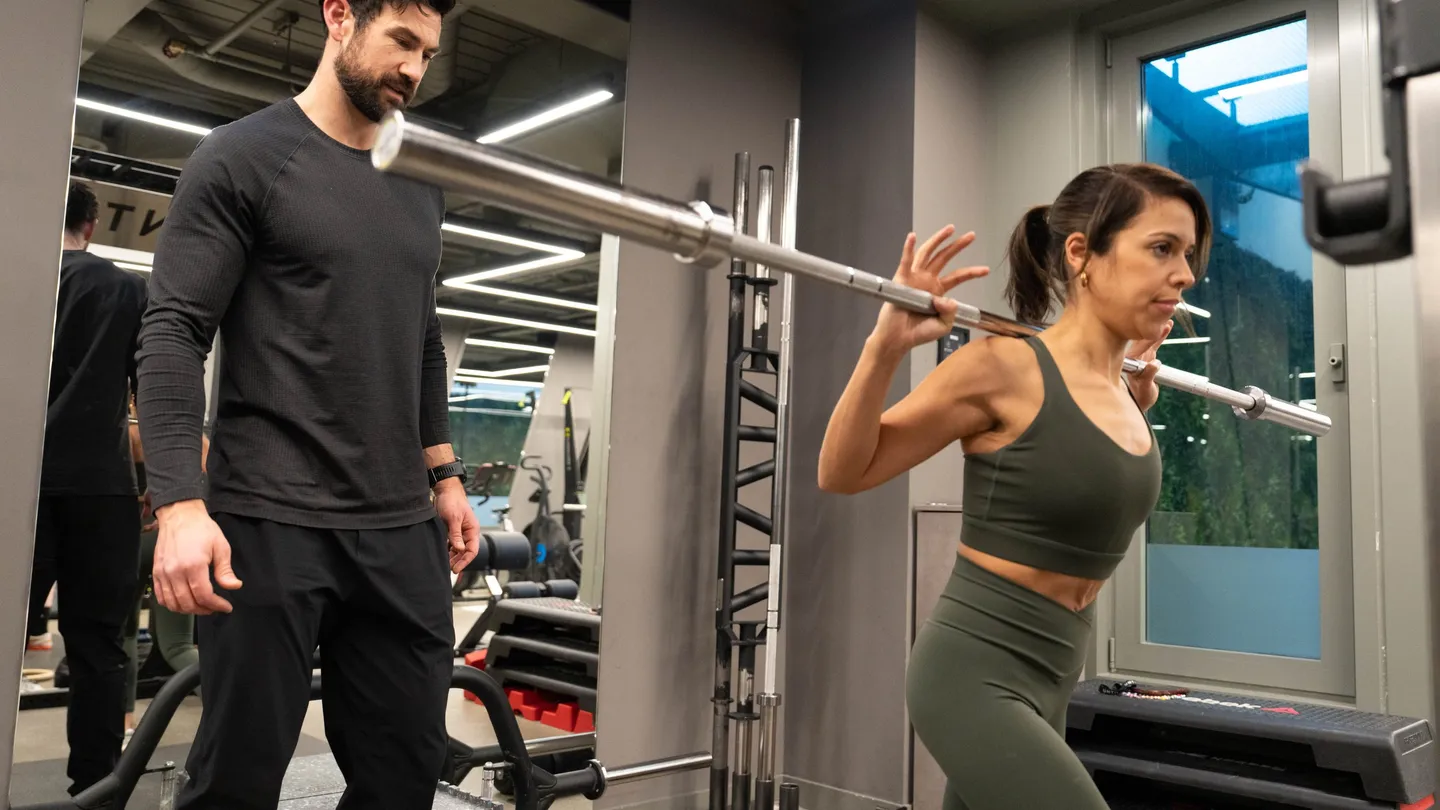
Rate set by your coachThe block is coached in person across four central London clubs, with every session logged so the programme is corrected against what you actually lifted.
See treatment detail →Nutrition Coaching
Rate set by your coachEnergy intake and a daily protein floor are set against your own maintenance level at the start of the block and reviewed on a fixed cadence through it.
See treatment detail →FAQ
12 week body transformation
FAQs
How long does a body transformation take?
Twelve weeks is the usual Body Transformation London block because it is long enough to show a visible change and short enough to hold. How much changes depends on your starting body fat, training history and consistency, and that range is mapped honestly at the first session rather than promised in advance.
What actually gets measured?
Body Transformation London tracks body measurements, working strength on the main lifts, and photographs taken in the same light and clothing each time. Scale weight is recorded but treated as the least useful of the four, because it moves with hydration, food and salt as much as with fat.
Can I do this while working full time?
That is who a Body Transformation London block is built for. Two to three coached sessions a week is the usual pattern, placed either side of a working day, with the eating plan designed around client lunches, late finishes and travel rather than assuming you cook every evening.
Who coaches a Body Transformation London block?
An independent coach working from one of the four UNTIL clubs, matched to your goal, your week and whichever site suits your commute. Body Transformation London sets none of the rates, which are the coach's own and are confirmed in writing after the assessment. Ask any coach for their qualification, their insurance and their CIMSPA entry.
What happens at the end of the twelve weeks?
You and your Body Transformation London coach compare the closing measurements against the baseline and decide what comes next: a second block against a different target, a maintenance phase to hold what you built, or a plan to train independently. That conversation happens before the last session.
Do I need to train for twelve weeks straight?
No, and almost nobody manages it. Travel, illness and weeks that get away from you are expected, and a Body Transformation London coach adjusts the programme when you come back instead of resuming as though nothing happened. Consistency across the whole block matters far more than an unbroken run.
Related Goals

Get Started
Book body transformation coaching in London.
A coach is matched to your goal and your club.
Body Transformation London • UNTIL, 111 Charing Cross Road, London WC2H 0DT
Start a BlockEvery enquiry is read by UNTIL Health Concierge, who match you with a coach. Rates are confirmed in writing before you commit.