Muscle Gain in London
Adding muscle through progressive resistance training, enough protein and enough recovery, coached in person across four private London clubs.
- Four clubs, 4 minutes or less from a station
- Open from 06:00 on weekdays
- Your rate confirmed in writing first

Overview
How to build muscle
Muscle is built by asking more of it over time, feeding the repair, and sleeping enough for the repair to happen. That is progressive overload, adequate protein, and recovery. Everything else in a training programme is a way of delivering those three reliably for long enough to matter.
The largest single reason people stop gaining is that the demand stops rising. Sessions that feel hard can still be identical week to week, and a muscle that is not asked for more has no reason to grow. So load, repetitions and hard sets per muscle group are logged and moved deliberately rather than left to how a session happened to feel.
Muscle gain is also slower than most people are told to expect, and it is slower again the longer you have trained. Setting that expectation honestly at the start is part of the job, because a realistic rate is one you keep training for, and an unrealistic one is abandoned around the point it would have started working.
What coached muscle gain gives you
Demand that actually rises
Load, repetitions and hard sets are tracked and moved deliberately. Progression stops being something you hope happened and becomes something visible in the log.
Technique that lets you keep adding
Compound lifts carry most of the growth and most of the risk. Coaching them properly is what makes a heavier bar next month a reasonable plan rather than a gamble.
Enough protein, consistently
A daily floor rather than a vague intention, spread across meals and built from food you already eat. It is the least interesting lever and one of the most reliable.
Volume matched to your recovery
Weekly hard sets are set against what you can actually recover from, given your sleep and your working week. Too little does nothing and too much stops being training.
A realistic rate, stated up front
Muscle is built slowly, and more slowly the longer you have trained. Knowing the honest rate is what keeps people training through the months where it is working but not yet obvious.
Four clubs with full strength floors
Racks, barbells, plate-loaded machines and dumbbells at Soho, Liverpool Street, Marylebone and Canary Wharf, so the programme runs properly wherever your week takes you.
What gets in the way
Why am I not building muscle?
- Training demand never rises, so the same weights and the same sets are repeated for months
- Total protein across the day sits below what recovery and growth need
- Weekly hard sets per muscle group are too low to be a meaningful stimulus
- Sitting in an energy deficit while expecting muscle to be added on top of it
- Sessions are hard but never logged, so there is no way to know whether anything progressed
- Sleep is short enough that recovery cannot keep pace with the training being done

When should you see a GP before heavier lifting?
See your GP before a muscle-gain block if you have a heart condition, high blood pressure, a hernia, recent surgery or kidney disease, where a high protein intake is a clinical decision. Pain that is new, worsening or undiagnosed goes to a physiotherapist or your GP before load goes on the bar.
Call 999 for chest pain, severe breathlessness or fainting during exercise, and use NHS 111 for urgent advice that is not an emergency.
How long does it take to build muscle?
Longer than most people are told, and longer again the more years you have trained. Body Transformation London sets that expectation at the first session, because a realistic rate is the one people keep training for.

- Strength on the main lifts usually climbs within weeks, well before any change in size.
- Arm, chest and thigh measurements tend to move over months rather than weeks.
- Beginners gain fastest; the rate slows each year you train, which is why progress has to be logged.
- A small energy surplus, a daily protein floor and enough sleep decide how much of the training becomes muscle.

How much does muscle gain coaching cost in London?
Coaches who publish rates for sessions at the UNTIL clubs Body Transformation London works with charge about £80 to £130 a session, and published 12-week programmes in London cost £2,150 to £3,420 (read 30 September 2026). Two or three sessions a week is the usual pattern for building muscle.
The block is 1-2-1 personal training for muscle gain, with nutrition coaching setting the protein floor and a small surplus. Your coach confirms their rate in writing before you commit.
How it works
How muscle gain is coached
1-2-1 Personal Training
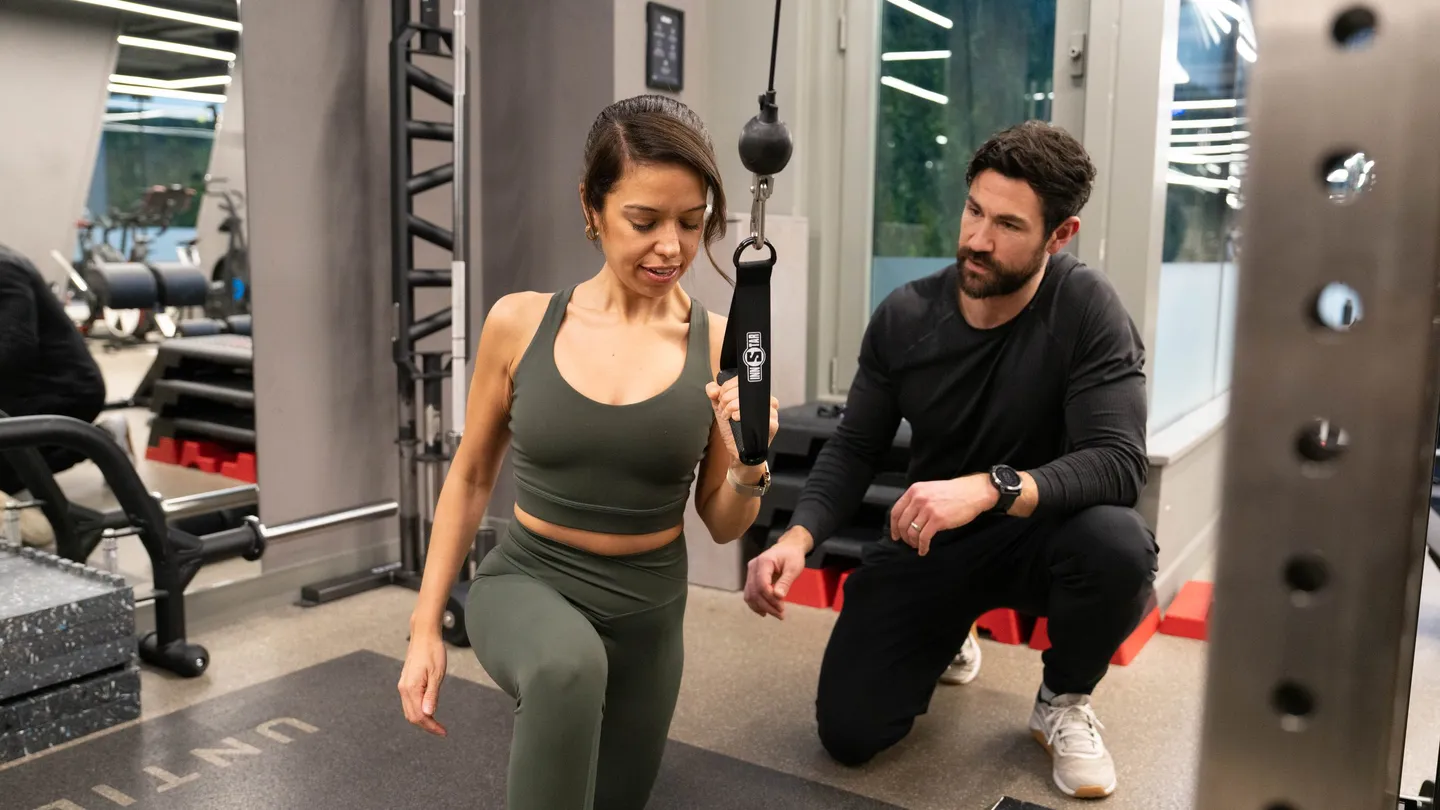
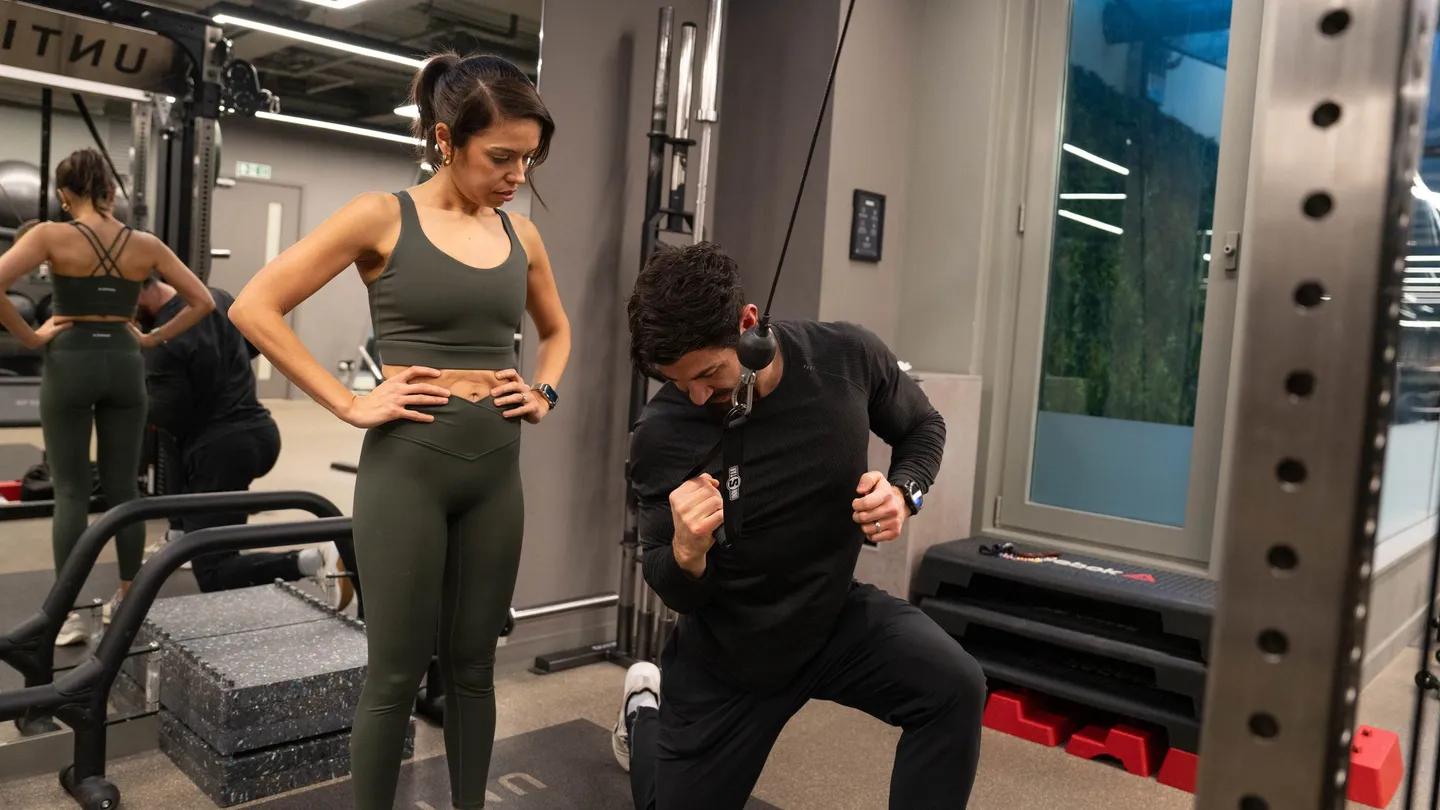
Rate set by your coachProgressive overload only happens when it is programmed and logged, and technique on the compound lifts is what makes added load safe to keep adding.
See treatment detail →Nutrition Coaching
Rate set by your coachA daily protein floor and a small energy surplus are what turn the training stimulus into tissue, and both are set against your own numbers.
See treatment detail →FAQ
Muscle gain
FAQs
How much protein do I need to build muscle?
Enough to support repair, spread across the day rather than concentrated in one meal, with the exact figure set against your body weight and training load. It becomes more important during a deficit, not less, because that is when lean mass is most at risk.
Why am I not building muscle?
Most often because training demand has stopped rising: the same weights, the same sets, week after week. The next most common reasons are protein below what recovery needs, weekly volume too low to be a stimulus, and short sleep. Each is diagnosed from the training log.
How long before I look like I lift?
Longer than the internet suggests and less long than it feels. Strength climbs within weeks, clothes change around three to four months, and the difference other people comment on usually lands in the second year of consistent training. A twelve-week block moves the measurements and builds the habit. Anyone selling a physique in twelve weeks is selling a lighting setup.
How many days a week should I lift?
Two to three well-programmed strength sessions a week is enough to build muscle for most people, provided the demand rises and recovery keeps up. More sessions help only if you can recover from them, which is why the number is set against your week rather than a template.
Do I need to gain fat to gain muscle?
Some gain is normal in an energy surplus, and the size of the surplus decides how much. A small surplus supports building while keeping fat gain modest, which is why it is kept deliberately small and reviewed as the block runs rather than left open.
Get Started
Book body transformation coaching in London.
A coach is matched to your goal and your club.
Body Transformation London • UNTIL, 111 Charing Cross Road, London WC2H 0DT
Start a BlockEvery enquiry is read by UNTIL Health Concierge, who match you with a coach. Rates are confirmed in writing before you commit.