Body Recomposition in London
Losing fat and adding muscle at the same time, coached across four private London clubs and tracked on measurements rather than on a scale that will barely move.
- Four clubs, 4 minutes or less from a station
- Open from 06:00 on weekdays
- Your rate confirmed in writing first

Overview
What is body recomposition?
Body recomposition is losing fat and gaining muscle across the same period, so your weight can sit almost still while your shape changes underneath it. It is the outcome most people actually want when they say they want to lose weight, and it is the reason a flat scale during a good block is a sign the plan is working rather than a sign it is not.
It happens most readily in three groups: people new to resistance training, people returning after a long gap, and people carrying more body fat to start with. In all three there is enough of a signal from the training and enough stored energy for the body to do both jobs at once. For a trained lifter close to their ceiling it is slow, which is why blocks are usually phased into a fat-loss period and a muscle-building period instead.
Because weight barely moves, the measurement has to change. Waist and limb measurements, working strength on the main lifts, and repeatable photographs are what the block is judged on. Tracking weight alone through a recomposition is the fastest way to quit something that is working.
What recomposition changes
Shape rather than size
The point is a different shape at a similar weight: leaner through the waist, fuller through the shoulders and back. It is the change people notice in photographs and clothes long before any number confirms it.
Strength that keeps climbing
Because the deficit stays modest and protein stays high, working strength usually continues to rise through a recomposition. Getting leaner while your lifts still go up is a good indicator the balance is right.
A measurement approach that fits
Waist and limb measurements, strength logs and repeatable photographs replace daily weigh-ins. The tracking matches what the block is actually doing, so progress is visible instead of hidden.
Muscle protected while fat comes off
Resistance training plus adequate protein is what makes lost weight come mostly from fat. Without both, a deficit takes lean tissue with it and leaves you smaller and softer at the same time.
A pace you can hold
Recomposition is slower than a hard cut and it asks for less from your week. That trade is what makes it a realistic plan for someone with a demanding job rather than a fortnight of heroics.
An honest read on whether it suits you
If you are several years into consistent training, recomposition may be the slower route and a phased block the better one. That assessment happens at the start rather than twelve weeks in.
What gets in the way
Is body recomposition possible?
- Judging a recomposition on scale weight, which is designed to stay flat while it works
- Running a deficit deep enough to lose fat quickly, which removes the energy muscle needs to be built
- Protein set too low to protect lean mass while energy intake is restricted
- Training volume that never increases, so there is no reason for the body to add muscle at all
- Being several years into consistent training, where recomposition is genuinely slow and phasing works better
- Sleeping badly through the block, which blunts both halves of the job at once

When should you see a GP before body recomposition?
Recomposition asks for a modest energy deficit and progressive strength training, which most healthy adults can start without a medical check. See your GP first if you have a heart condition, high blood pressure, diabetes treated with medication, kidney disease (protein targets become a clinical decision) or are pregnant. If eating has ever been a struggle, talk to your GP or Beat before tracking body composition.
Call 999 for chest pain, severe breathlessness or fainting during exercise, and use NHS 111 for urgent advice that is not an emergency.
How long does body recomposition take?
Longer than a straight fat-loss phase, and slower again the longer you have trained. Body Transformation London runs recomposition as a 12-week block and judges it on the tape, strength and photographs, because the scale can sit almost still while both changes happen underneath it.

- It happens most readily in beginners, people returning after a break, and people starting with more body fat.
- People who describe themselves as skinny fat, slim in clothes but soft, are among the best candidates.
- Someone several years into consistent training usually gets further by phasing fat loss and muscle gain.
- Strength on the main lifts should keep rising through the block; if it falls, the deficit is too deep.

How much does body recomposition coaching cost in London?
Coaches who publish rates for sessions at the UNTIL clubs Body Transformation London works with charge about £80 to £130 a session, and published 12-week programmes in London cost £2,150 to £3,420 (read 30 September 2026). A recomposition block usually runs at two or three sessions a week.
It is delivered as 1-2-1 personal training for body recomposition, with nutrition coaching holding protein high and the deficit modest. Your coach confirms their rate in writing before you commit.
How it works
Body recomposition coaching in London
1-2-1 Personal Training
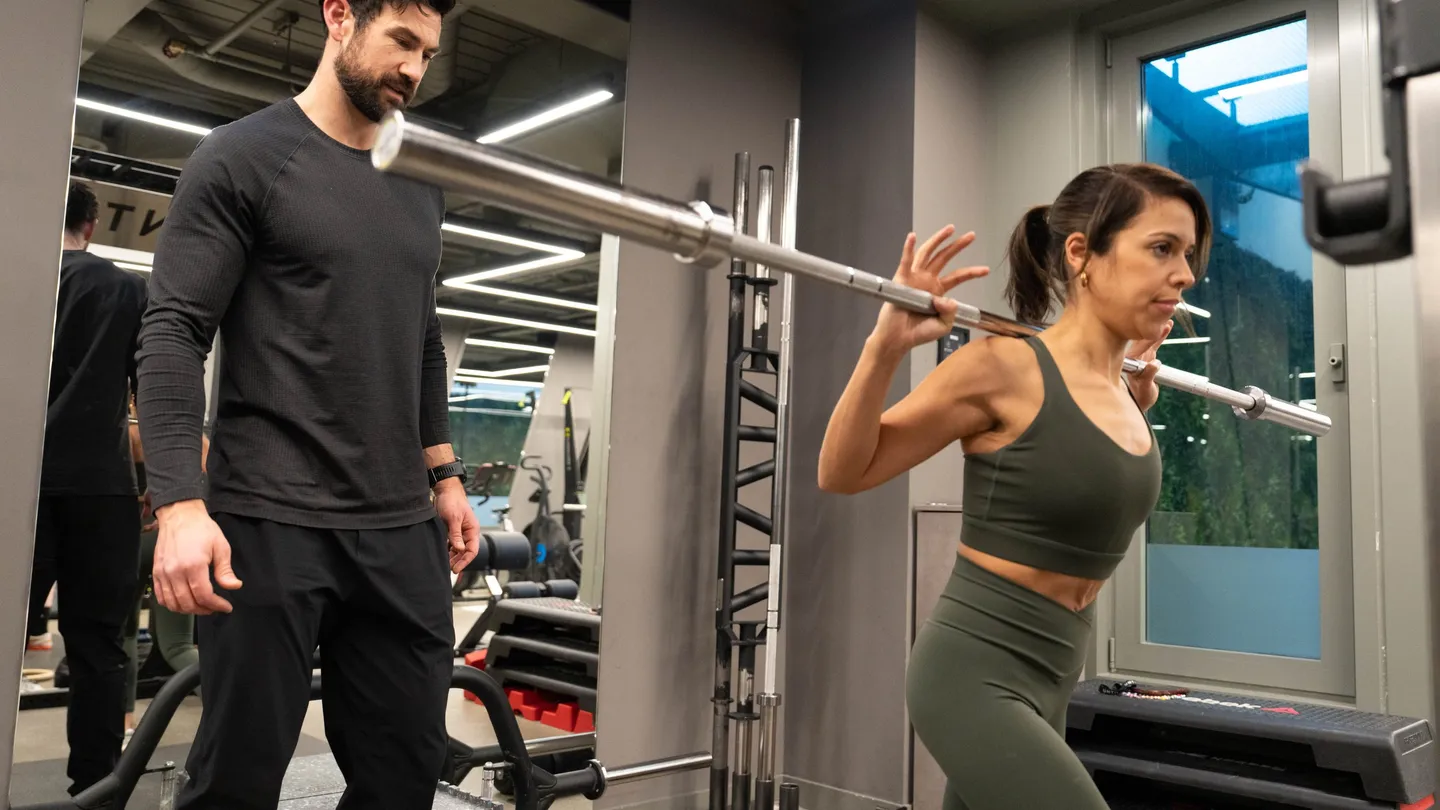
Rate set by your coachProgressive resistance training is the signal that tells the body to add muscle while fat is coming off, and it is coached and logged session by session.
See treatment detail →Nutrition Coaching
Rate set by your coachA modest deficit with protein held high is the narrow band recomposition happens in, and it is set against your own maintenance rather than a generic figure.
See treatment detail →FAQ
Body recomposition
FAQs
What is body recomposition?
Losing fat and building muscle at the same time, rather than doing one and then the other. It is judged on measurements, strength and photographs instead of on weight, because the two changes cancel each other out on a scale. Body Transformation London runs it as a twelve-week block with the same measurements repeated at the end.
Can you build muscle and lose fat at the same time?
Yes, under specific conditions. It happens most readily in people new to resistance training, returning after a long break, or carrying more body fat to begin with. A Body Transformation London block delivers it with progressive training, protein held high and a deficit modest enough to leave energy for building.
Why has my weight not changed?
During a recomposition that is the expected result. Fat lost and muscle gained can offset each other almost exactly on the scale while your measurements and photographs both move. This is why Body Transformation London judges the block on measurements, strength and images rather than weight.
How long does recomposition take to show?
Measurable change usually takes a few months of consistent training and eating rather than a few weeks, and it is slower than a straight fat-loss phase. The trade is that it is easier to sustain alongside a full working week, which is why Body Transformation London runs it as a 12-week block.
Is recomposition better than a cut?
It depends on your starting point. Carrying a good amount of body fat and new to lifting, recomposition is usually the better route. Already lean and several years into training, a phased approach that separates fat loss from muscle gain normally moves faster, and a Body Transformation London coach will say so.
Is body recomposition the answer to being skinny fat?
Usually, yes. Skinny fat means a normal weight with little visible muscle and a soft midsection, which is exactly the starting point where recomposition works best. Body Transformation London programmes it as progressive strength training with protein held high and a small deficit or maintenance intake, rather than a crash diet.
Related Goals


Get Started
Book body transformation coaching in London.
A coach is matched to your goal and your club.
Body Transformation London • UNTIL, 111 Charing Cross Road, London WC2H 0DT
Start a BlockEvery enquiry is read by UNTIL Health Concierge, who match you with a coach. Rates are confirmed in writing before you commit.